
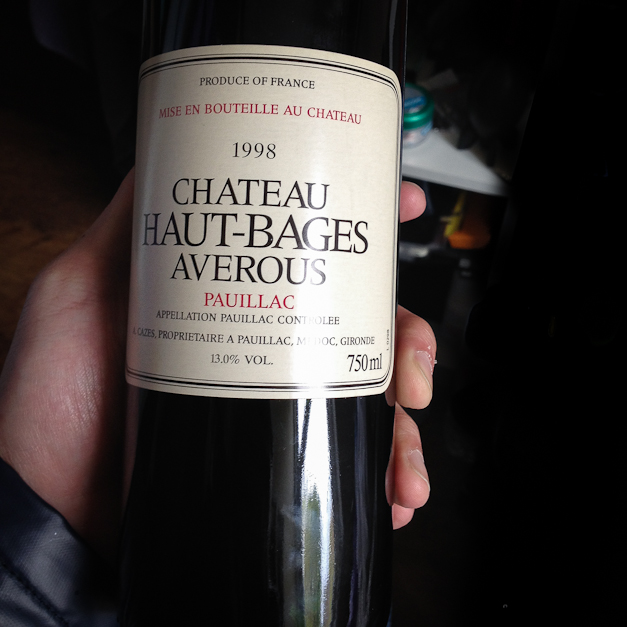
A Prologue The first of a new series of posts I intend to write on a weekly basis. Not reviews per say and a ‘side project’ to to the restaurant stuff. Rather these are personal tasting notes, and an open diary about my wine exploits. Wine has slowly but surely taken a backseat to my food blogging, even though I had always been fascinated with ‘discovering’ them. Though admittedly, I know very little about the world of wine. I cannot discern all the known discern-able flavours which may present itself in a glass, and I do believe it is entirely subjective. For me however, I think the measure of a good wine is how memorable the experience was, be it fabulous or terrible, moving you to feel some sort of emotion. Very recently I poured a good proportion of my savings into starting a cellar, primarily for investment, partly as a ‘romantic’ hobby to amass a collection of wines suitable for drinking when I look mature enough to not be ID-ed at a Sainsbury. This has naturally upgraded my fascination and caused me to steadily resume this habit of popping a new bottle every week to decide on putting away young vintages for my cellar (hence this series of posts). True to the stereotype, my first twelve bottle case were Lafites. One of the noble five 1st Growths in Bordeaux,
Swiss wines are really rare. Only about 2% of all Swiss wines made are ever exported and its quite likely that one may not even find them in major restaurants in Geneva. So when I read about an exclusive Swiss wine tasting in London, I really had to sample it for myself. Forty quid, a dozen bottles and in the company of the great Neville Blech. We now take a detour from restaurant hopping to finding that drink, in the city of Smoke
High Timber Official Site 8 High Timber Street EC4V 3PA 020 7248 1777 £40pp plus wine I love to wine and dine. However, my shrinking wardrobe and bank balance doesn’t always permit my indulgences on a more frequent basis. While surfing the luminaries of foodie-interwebs, I came across the expertly written, if subdued opinion of London’s newest wine restaurant. High Timber stores 40,000 bottles of wine in the cellars beneath the restaurant, not to mention the use of Dyson busting, the ‘Xcelarator’ in the toilets. Needless to say I was intrigued by their choice of hand dryers and was delighted to take up the offer of a free meal when it came knocking
You are now reading intro | one | two | three | four | five | six | part seven It has taken me almost three months to get here, but I’m glad I stuck to my seven part guns and have wrote about one my favourite subjects: wine. In the end, when I’m reflecting on what I’ve said (and what I haven’t) , my knowledge on wine is but a grain of sand in the most expansive of beaches. So it is only appropriate that I highlight some of the best wine resources around the web to conclude this my quickie guide to wine
You are now reading intro | one | two | three | four | five | part six | seven I think I’ve covered most of the wine basics in five parts and feel as if this would be the perfect post to write about some alternatives to the grape staple. There is so much stuff out there to try, it would take you a lifetime to experience it all. The human quest to continually search for methods to refine the hedonistic has reached the point where you can find alcohol being made from pretty much all kinds of starch based foods out there. I’m not going to go into every single one, instead I’ll highlight the two which I think most of you will find interest in: sake & scotch whisky
You are now reading intro | one | two | three | four | part five | six | seven So you’re in restaurant and you’ve ordered all this wonderful food, but looked at the wine list and got stuck. You look up and you feel the stress of a table full of expectant faces giving you that ‘well, what do we drink look?’. Fear not, because here are some quick tips which will help you navigate through that peril. Following on from part four (pairing food with wine), we’ll now move to talk about a few strategies to picking the best wine to suit the food when you are out and about
You are now reading intro | one | two | three | part four | five | six | seven Last week we talked about buying & storing wine. Hopefully you would have found the tips useful. Today, it’s going to be a relatively breezy ( though fairly contentious ) post as we move to talk about pairing food with wine. You will appreciate that different styles of wine work best when paired with particular foods. When paired correctly, the flavours can bounce off each other and help accentuate the overall profile swirling in your mouth. It’s abit like dunking donuts into coffee, or scones & tea or hot chocolate fudge sauce on vanilla ice cream. When complimenting flavours come together, it can explode. Boom. I’ll state now that it’s difficult for me to recommend specific bottles of wine, instead I’m going to suggest the grape varietal which best fits the food. For more information on grape varietals, read part one here. As usual, an index of what’s covered in this post: Meat Fish Dessert & aperitifs On its own, a good book or a long conversation
QGTW now reading intro | one | two | part three | four | five | six | seven Did you manage to put your new tasting skills to good use? Cool, we are about the half-way point in this series and I hope that you’re finding this helpful. If there’s anything you’d like to have included, or have any questions, please do leave a comment at the end of this post, I’ll happily incorporate your needs! In part three, lets turn our attention to buying those special bottles and a few simple tips to turn your home into the pefect short term wine cellar. Here’s an index of what is included in this post: Where to buy wine The alcoholic criteria Storing the precious ones
Its a trend. London’s like that, stuff comes in and out of fashion. Wine bars used to be ( long long ago, in a galaxy far, far away) cool, then it kinda died but now its back and its all the rage. When I was hunting for one to write about, I thought it would only be appropriate to go to the oldest one in London; Gordon’s wine bar
I love visiting wine shops, most feature these cool and creaky wooden floors. A little musky and dusty, in London the shopkeepers are almost always very cheerful and friendly. I mean, you got to be if your job is to sell not just a drink, but an experience to your customer
QGTW now reading intro | one | part two | three | four | five | six | seven Welcome back folks. Last week we talked about what the different grape varietals were and their fundamental characteristics. Did you try the Diablo Pinot or the Dr Loosen Riesling? If not, maybe I didnt entice you quite enough, if you did, then well done on you! Ok, in this edition, its all about understanding your bottles. We’ll start with the physical appearances and then move inwards and give you the basic tools to help you understand what wine really is. By the end of this post, you should be well equipped to confidently narrow down what you want and start enjoying it properly. Remember now, wine is not about getting drunk or about what other people say is good, its all about you and what you think is good. Here’s what’s covered in this post: Gear you might need What the labels mean Prepping the bottle Prepping the nibbles Look, Sniff, Smell & Taste After Taste One last thing
QGTW now reading intro | part one | two | three | four | five | six | seven Love wine? Me too, now let’s talk about it, all about it and from the very beginning. Here’s a little index of what’s covered in this post: A brief exposition Wine is good for you Everybody loves somebody else Old World vs New World Red Grape Varietals White Grape Varietals
Wine shops in London are cool. The Sampler is particularly cool. Why? Because you get to try 80 bottles all at once. A very interesting concept that is the first ever to be implemented in this country. Yes, you are looking at the concept right now. The little metal tubes sticking out from the top of the machine are where your glass goes for a ‘sip
QGTW now reading intro | one | two | three | four | five | six | seven Wine. One of life’s simple pleasures. Like great food, wine doesn’t have to cost an arm or limb to taste great, it just does. I think of wine as an artform in itself, a craft that has been mastered by man, but so flexible that a multitude of styles can be attained. Passion and soul are painstakingly poured into every bottle made. Its a kind of liquid elegance, brimming with style and longing to excite dry taste buds. What is the quickie guide